
The Weight of Human Waste by Ravichandran Dilochchini

Introduction
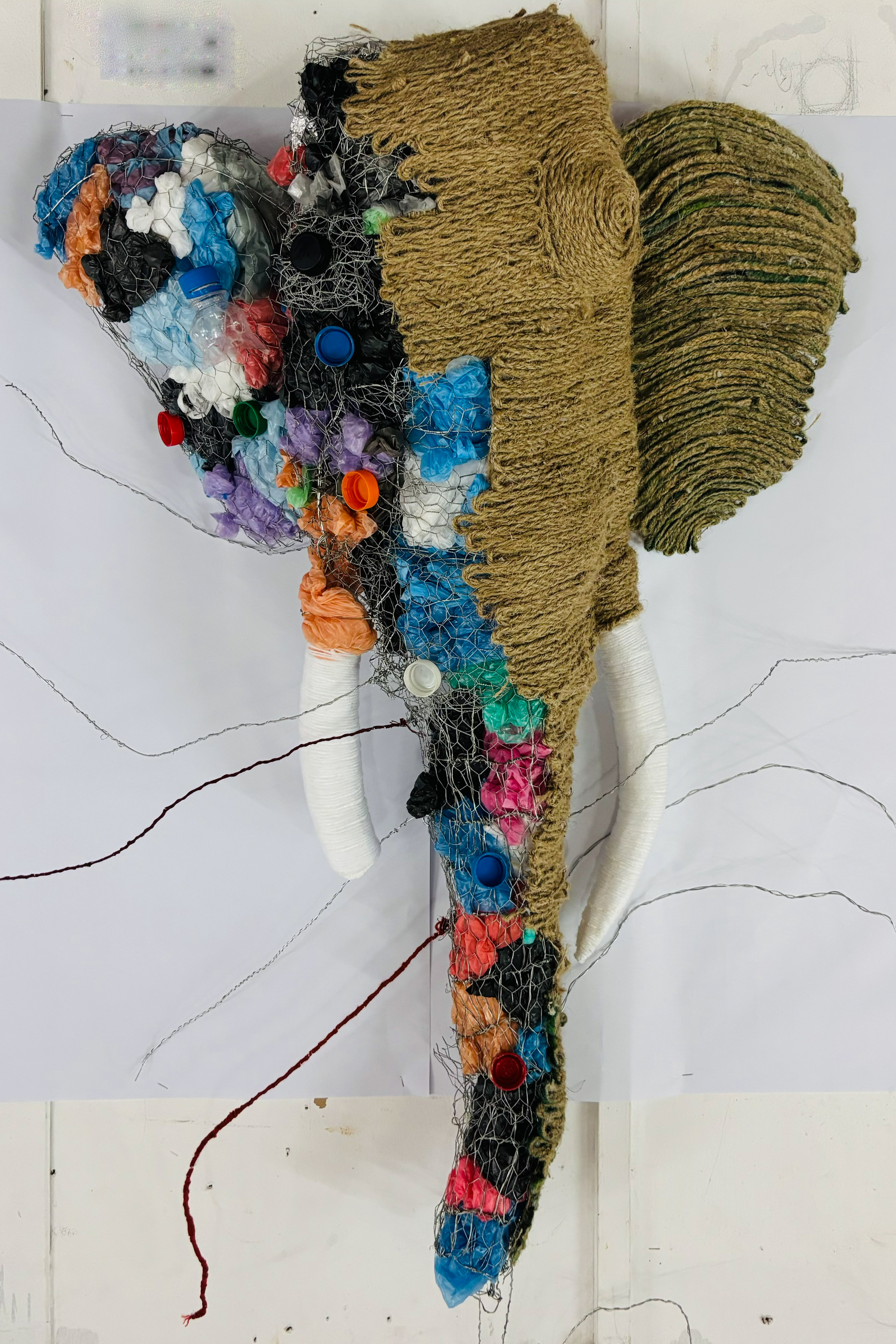
Ravichandran Dilochchini’s mixed-media work, "The Weight of Human Waste," presents a compelling exploration of the impact of environmental neglect. Through inventive use of discarded materials, the piece draws attention to the pressing issue of the human-elephant conflict in Sri Lanka and challenges viewers to confront the catastrophic consequences of waste on wildlife.
About the Artwork
This artwork captures the stark reality of the human-elephant conflict in Sri Lanka. Inspired by environmental issues observed by the artist, it highlights the plight of elephants forced from their natural habitats into waste dumps in search of food. Here, they ingest plastics and dangerous materials, leading to tragic injuries and deaths. By presenting the elephant upside down, the artist symbolizes a world disrupted by human actions. The inclusion of plastic bags, bottle caps, wire, and discarded materials is deliberate, representing not only pollution but the grave dangers arising from poor waste management. The wires and ropes within the piece depict elephant fences, traps, and barriers that limit their freedom. The visual form captures the multiple threats these majestic creatures face, including railway accidents, illegal hunting, and lethal interactions with humans. By repurposing discarded materials, the artwork transforms these symbols of human negligence into a poignant narrative of animal suffering.
Hashtag Kalakar Expert Interpretation
Visual Description
The artwork features an elephant crafted through a mixed-media technique that prominently incorporates plastic bags, bottle caps, wires, and other waste materials. In an unusual yet thought-provoking manner, the elephant appears upside down. The textured surface of the elephant's body is vibrant, adorned with an array of colors due to the diverse materials used. Twisted wires and fabric create the structure and outline of the elephant, while large ears, made from fibrous material, stand out against the textured surface. The trunk and tusks extend downwards, ending in a spectrum of materials that add color and depth.
Artistic Interpretation
The upside-down elephant serves as a powerful symbol of the chaos and detrimental impact of human activity on nature, focusing specifically on elephants in Sri Lanka. The use of mixed media not only marries the concept with the substance, but it also amplifies the tactile quality and raw emotion of the piece. By employing waste materials to construct the elephant, the artist underscores the direct link between human negligence and the resultant degradation of the environment, compelling viewers to recognize the vulnerability of wildlife, ensnared and confined by man-made barriers. The multifaceted arrangement of colorful plastics highlights the pollution that mars the inherent beauty of wildlife, urging immediate reflection and action towards better waste management practices.
Mood & Atmosphere
The atmosphere created by "The Weight of Human Waste" is one of urgency and concern. The disorienting depiction of the upside-down elephant conveys a sense of instability and distress, reflecting a world thrown into chaos by human intervention. The erratic textures and interplay of colors from waste materials evoke a mood of tumult and disruption, emphasizing the tragic consequences of human-wildlife conflict and the fraught relationships that arise from our environmental mismanagement.
About Hashtag Kalakar
This poignant artwork was submitted to the Hashtag Kalakar competition, a platform that offers artists the opportunity to present their innovative creations to a broader audience. By participating in Hashtag Kalakar, artists utilize a valuable stage to express their visions and raise awareness on crucial issues through the power of art.
Comments