
The Forbidden Fruit by Wenya Zhang

Introduction
"The Forbidden Fruit" by Wenya Zhang is a captivating piece that challenges conventional symbolism and societal norms. This artwork invites viewers into a surreal exploration of identity, pressure, and personal dissection in the digital age.
About the Artwork
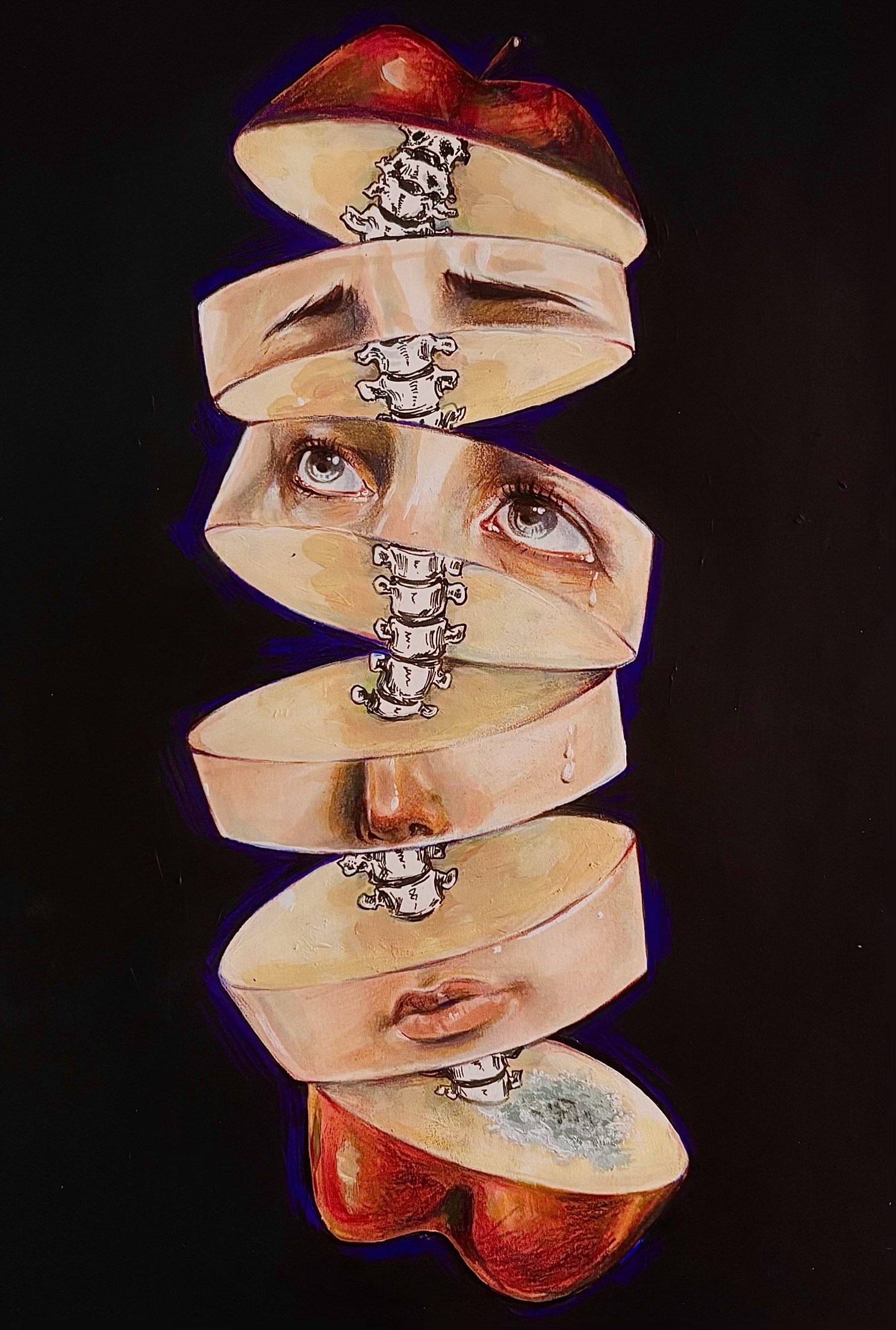
Wenya Zhang's "The Forbidden Fruit" comprises four distinct elements: slices of apples, a woman's face, a spine, and creeping mold. The apple, traditionally a biblical symbol, serves as a vessel housing a woman's visage. Intertwined with a central human spine, the composition hints at the broader concept of the female form while simultaneously symbolizing the physical and emotional dissection women endure in today's digital world. In particular, the mold at the base signifies the corrosive impact of social media, beauty standards, and societal pressures subtly infiltrating the minds of young women nationwide. Through the woman's raw gaze, the piece exposes the harrowing reality of navigating modern womanhood, where the boundary between one's natural self and societal expectations begins to blur.
Hashtag Kalakar Expert Interpretation
Visual Description
The artwork "The Forbidden Fruit" presents a vertically structured composition with apple slices revealing fragments of a woman's face, including her eyes, nose, and mouth. These slices link through a central spine, creating a spiral effect. At the bottom, a moldy area appears on the apple slice, contrasting starkly against the dark backdrop, which emphasizes the central elements.
Artistic Interpretation
Zhang's work artfully combines realistic portraiture with surreal elements, offering a profound reflection on identity and societal scrutiny. The apple is traditionally a symbol of knowledge and temptation; here, it transforms into a vessel for depicting the female form, suggesting themes of objectification and scrutiny. The visibility of the spine may symbolize resilience and structural integrity amidst such dissection. The creeping mold represents external societal pressures, such as beauty ideals and cultural standards, which can lead to decay if left unchecked. This interpretation highlights the complexities of female identity within a society that often dissects and evaluates natural beauty through an unforgiving lens.
Mood & Atmosphere
The mood evoked by "The Forbidden Fruit" is both tense and contemplative. The juxtaposition of human and fruit elements imparts a vulnerability, augmented by the emotional depth of the woman's gaze. This, coupled with the dark background, creates a sense of unease and disquiet, as it emphasizes the tension between life and decay, as well as the fragility of navigating personal identity amidst external pressures.
About Hashtag Kalakar
"The Forbidden Fruit" was submitted as part of the Hashtag Kalakar competition, which serves as a platform for artists like Wenya Zhang to showcase their talents. Hashtag Kalakar provides an opportunity for artists to reach new audiences and engage with creative communities worldwide.


Comments