
Swan song for Lady Earth by Kirsten-Mari Swanevelder

Introduction
Kirsten-Mari Swanevelder's "Swan song for Lady Earth" captures the viewer's attention with its hauntingly poignant imagery and evocative themes. This artwork provides a visual commentary on the environmental consequences of human actions, inviting a deep reflection on our collective responsibility.
About the Artwork
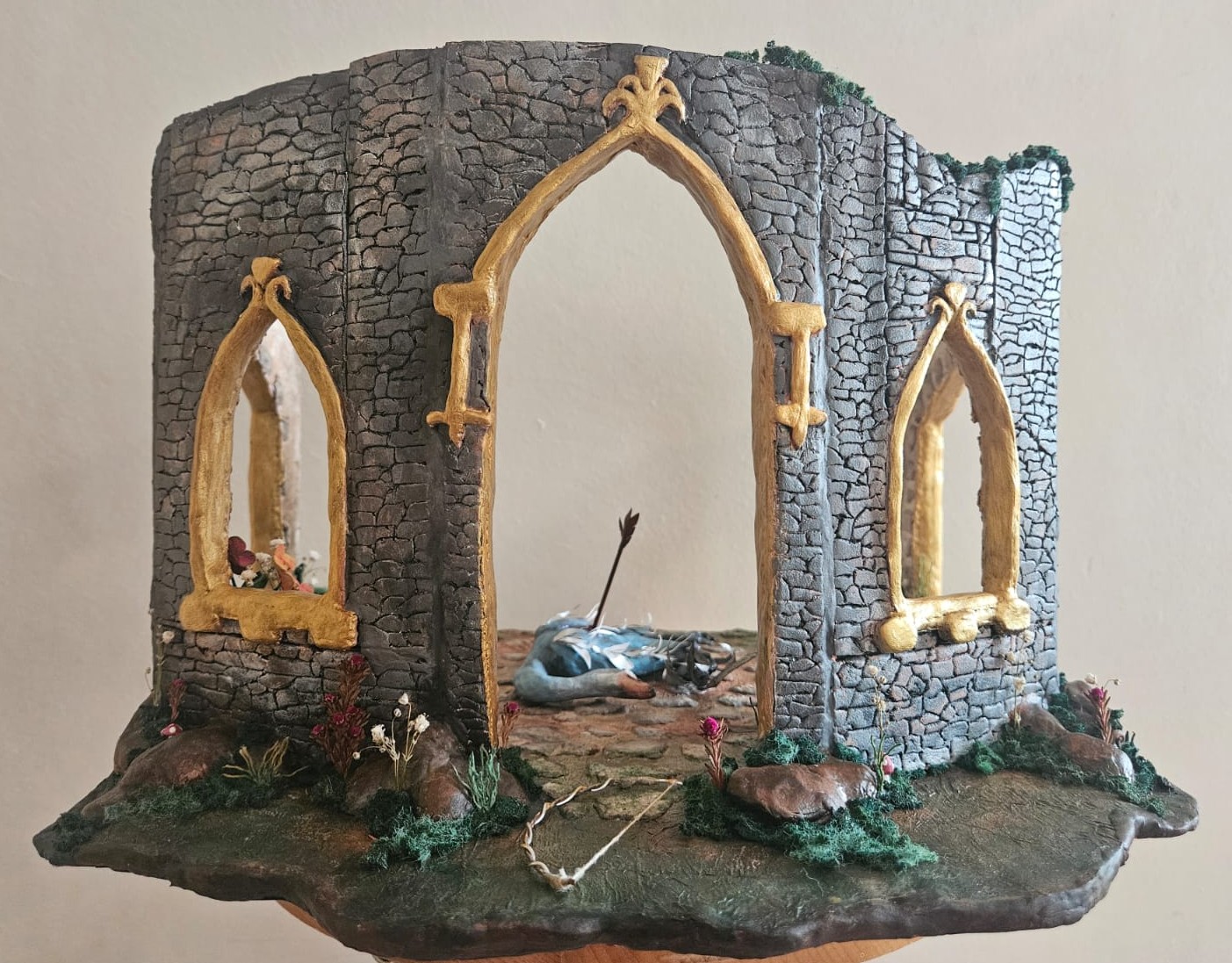
Kirsten-Mari Swanevelder drew inspiration for "Swan song for Lady Earth" from the song "Love Song for Lady Earth" by Del Water Gap. The piece eloquently communicates regret and lament over the irreversible harm inflicted by human decisions. It centers around the blue crane - South Africa's national bird - depicted as lying wounded amidst ruins. The arrow piercing its body serves as a silent accusation directed at the viewer, with a bow placed at the diorama's entrance to confront their involvement in this tragedy. Crafted using clay and recycled materials like polystyrene, cardboard, sponge, egg carton, an old poster, and tinfoil, the artwork stands as both a eulogy and a mirror. It challenges the audience to perceive the swan song of Earth not as a distant reality but as a present consequence of every careless action.
Hashtag Kalakar Expert Interpretation
Visual Description
The diorama is set against the backdrop of a gothic ruin, characterized by grand, pointed arches and intricate stone details. The outer walls are covered in weathered gray stones, while the arches are accented with gold, suggesting a former grandeur. At the heart of the diorama lies a blue crane, pierced by an arrow, surrounded by elements of nature such as grass, rocks, and small flowers. The presence of decay and abandonment suggests a tragic past event. Prominently displayed at the entrance is a bow, hinting at the tool responsible for the bird's wound.
Artistic Interpretation
"Swan song for Lady Earth" can be interpreted as an allegorical reflection on environmental degradation and human accountability. The wounded blue crane symbolizes the natural world under threat, while the bow and arrow point to the direct harm caused by humanity. The dilapidated ruins signify the environmental decay wrought by neglect and exploitation. By utilizing recycled materials, the artwork underscores environmental awareness and the urgent need for sustainability. Swanevelder invites all who view this piece to contemplate their role in nature's decline and to consider avenues for change.
Mood & Atmosphere
The mood of the artwork is undeniably somber and contemplative. The dilapidated setting and wounded bird evoke feelings of loss, mourning, and tragedy. Muted and earthy color tones further emphasize an atmosphere of desolation, echoing the overarching themes of ecological decay and human consequence.
About Hashtag Kalakar
This remarkable artwork was submitted as part of the Hashtag Kalakar competition, which provides a vibrant platform for artists to showcase their work and express their creativity. Hashtag Kalakar is dedicated to helping artists reach a wider audience and share their unique perspectives with the world.


Comments